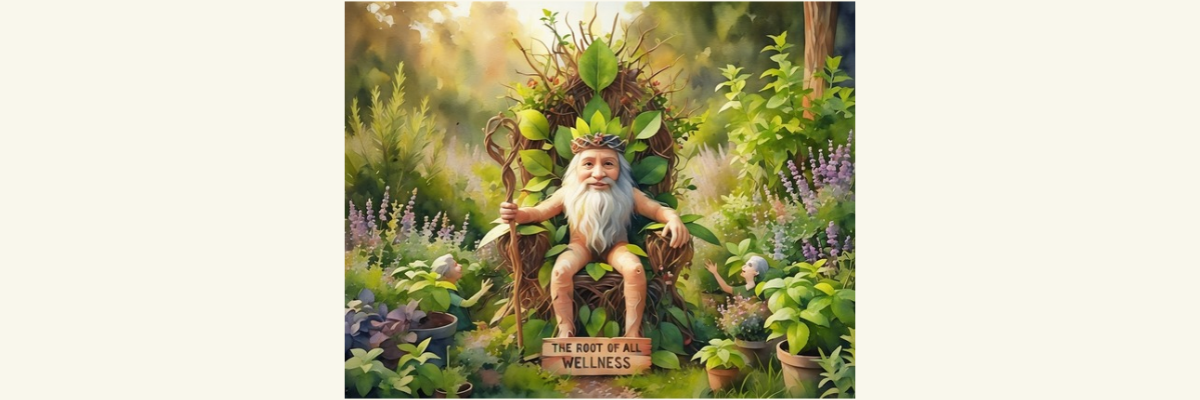
Fame, Fads & the Forgotten Pharmacopeia
Every so often, one unsuspecting plant is plucked from the vast green pharmacopeia and crowned the herb we apparently cannot live without. But what makes a herb suddenly famous, who decides what becomes the next botanical sensation and what happens to all the equally remarkable plants waiting patiently in the wings?
Herbs, it seems, are not immune to celebrity culture. Every few years, one unsuspecting plant is hauled out of relative obscurity, dusted off, photographed beautifully and declared the answer to something we had apparently been struggling with for centuries. Suddenly it is everywhere. It appears in smoothies, supplements, skincare, podcasts and conversations between people who six months earlier could not have identified it growing beside the road. Then, just as mysteriously, the great herbal spotlight swivels elsewhere.
We have seen aloe vera enjoy enormous fame, followed by echinacea, ginseng, ginkgo, St John’s wort, evening primrose, cranberry, milk thistle, maca, turmeric, goji, açai, moringa, matcha, reishi, lion’s mane, ashwagandha and elderberry. More recently, humble mullein has acquired an unexpectedly glamorous second life. Mushrooms have become positively aristocratic. Sea moss has had its coronation. Even dandelion, for generations the persecuted inhabitant of lawns occasionally finds itself reintroduced as a desirable botanical. Meanwhile nettle is standing in the corner thinking, “Where have you all been?”
The Herb of the Hour
There is nothing particularly new about this phenomenon. What has changed is its speed. Plants have always travelled with people, trade, conquest, fashion and changing ideas about health. Spices and medicinal plants arriving from distant countries could acquire extraordinary reputations precisely because they were unfamiliar. European apothecaries once prized imported rhubarb root. Cinchona bark became enormously important after reaching Europe from South America. Ginseng inspired fascination far beyond the cultures that had valued it for centuries. Tobacco itself was once enthusiastically introduced to Europe as a medicinal wonder before its darker legacy became abundantly apparent.
At other times an old local plant was rediscovered rather than truly discovered. Its knowledge had never disappeared completely; public attention had simply wandered away. This distinction matters. When the modern world announces that it has “discovered” a plant, somewhere an Indigenous healer, village herbalist, grandmother or ancient medical text may reasonably clear its throat.
Before Instagram, There Was Gossip
Herbal fashions did not require algorithms. News travelled through markets, monasteries, physicians, sailors, herbals, apothecaries, royal courts and ordinary conversation. A plant associated with a famous cure, fashionable physician, explorer or distant culture could develop an aura remarkably quickly. People have always been people. We hear that someone remarkable is taking something and immediately wonder whether we ought to be taking it too.
Social media has merely fitted this ancient impulse with a rocket engine. Now a single enthusiastic interview or viral post can transform an obscure botanical into an international commodity almost overnight. Search engines reinforce the attention, manufacturers respond to demand, shops put it on their shelves and soon its fame begins to look like evidence of superiority. But popularity and importance are two entirely different currencies.
From Echinacea to Ashwagandha
Anyone who has worked with herbs for decades can almost date periods by their botanical celebrities. There was the great aloe vera enthusiasm. Echinacea became virtually synonymous with immunity. St John’s wort had its spectacular moment. Ginkgo was suddenly on everybody’s mind, appropriately enough. Cranberry became inseparable from urinary health. Milk thistle emerged from herbal circles into mainstream consciousness. Turmeric escaped the spice cupboard and conquered cafés. Maca and goji arrived bearing promises of vitality. Elderberry surged dramatically during the pandemic years.
Then came the adaptogen boom, with ashwagandha, rhodiola and medicinal mushrooms moving into territory once occupied by multivitamins. Some deserve every ounce of renewed attention. What is curious is our tendency to behave as though only a handful of plants can be interesting at once. Herbalism contains thousands of useful species. Nature did not issue a Top Ten.
Why Do We Crown Things?
Perhaps this tells us as much about human beings as it does about herbs.
We seem to enjoy concentrating our attention; we make celebrities of people, foods, diets, destinations, ideas and plants. Complexity is difficult to market; a hero is wonderfully simple. “Here is an extraordinary herb” travels much more easily than “Here is one useful member of an immense pharmacopeia whose suitability depends upon the individual, constitution, preparation, dose, season and circumstance.” The first fits nicely on a screen, while the second is closer to herbalism.
Traditional systems of healing rarely understood plants as interchangeable miracle substances. Ayurveda, Western herbal traditions, Chinese medicine and countless Indigenous healing systems developed sophisticated ways of observing qualities, constitutions, combinations and circumstances. A warming herb is not wanted merely because warming herbs are fashionable. A stimulating plant is not automatically appropriate for someone already overstimulated. What nourishes one constitution may burden another. The question was never simply, Is this herb good? The better question is, Good for whom, when and why?
The Trouble With Super Herbs
This is where botanical celebrity can become troublesome. Once a herb acquires the prefix “super”, nuance tends to leave by the back door. People begin taking it because everyone else is taking it; more becomes better. Traditional preparations are replaced by highly concentrated extracts. Plants with particular actions are treated as everyday foods. Contraindications, medicines, pregnancy, individual sensitivities and constitutional differences disappear beneath the enthusiasm.
There is also an ecological cost when sudden global demand descends upon a plant faster than responsible cultivation can respond. A herb may go from obscurity to overharvesting without ever enjoying the comfortable middle ground of being simply appreciated. Fame can be exhausting, even when you are a root.
But Long Live the Herbal Fad
And yet, we cannot entirely disapprove. Every herbal craze opens a door.
Someone hears about mullein and discovers that the fuzzy plant they have walked past for years has an extraordinary history. Someone buys turmeric and begins wondering why spices were once considered medicines. Someone encounters lion’s mane and discovers the vast medicinal traditions surrounding fungi. Echinacea leads them into North American herbal knowledge. Ashwagandha may lead them towards Ayurveda. Curiosity has to begin somewhere. If fashion persuades people to look again at the living world, there are worse crimes. The important thing is to keep walking once we have entered the door.
The Plants Waiting in the Wings
For every fashionable herb there are scores of magnificent plants receiving very little applause. Yarrow has been accompanying human wounds and fevers since antiquity. Nettle quietly offers food, fibre and medicine. Burdock has travelled beside human settlements for generations. Plantain is trodden underfoot while people order exotic herbs from the other side of the planet. Marshmallow, fennel, mugwort, meadowsweet, raspberry leaf, horsetail and countless others continue their work without publicists. Perhaps next year one of them will acquire a beautifully designed packet and become an overnight sensation. They will try not to let it go to their heads.
The Great Herbal Orchestra
The deeper herbal tradition offers something far richer than a procession of solo acts. Plants work within relationships. One may warm while another cools. One stimulates while another settles. One moves, another nourishes, another protects, another helps clear what has become stagnant. Herbal formulas themselves express this understanding: the most celebrated ingredient is not necessarily the one holding everything together.
It is rather like hearing an orchestra and deciding the cello is the new super-instrument. The cello is magnificent. So is the oboe. The music depends upon knowing when each belongs. Homogeneity may make marketing easier, but Nature appears profoundly uninterested in it. A meadow does not contain one successful plant repeated ten thousand times. Its intelligence lies in diversity, relationship, adaptation and response. Our herbal practice can learn from the same principle.
No Herb Needs a Pedestal
Perhaps the most grounded response to the latest botanical sensation is neither cynicism nor blind enthusiasm, but curiosity. Learn about it. Discover where it came from and who preserved knowledge of it. Find out which part is traditionally used, how it was prepared, what qualities it possesses and when it may be inappropriate. Then place it back among its companions.
Ashwagandha need not be dethroned because it became fashionable. Turmeric has not become less wonderful because somebody put it in a latte. Mullein can enjoy its unexpected moment in the sun. Lion’s mane may continue sporting its magnificent shaggy celebrity hairstyle. But none needs to save the world.
The Whole Pharmacopeia Is Waiting
The true wonder is not that one herb suddenly becomes famous. It is that there are so many extraordinary plants that remain almost unknown. Perhaps the herbal flavour of the month is best regarded as an introduction rather than a destination. Each celebrity plant can point beyond itself towards the enormous botanical intelligence from which it came. So by all means welcome the latest herb onto the red carpet. Ask what it does. Smell it, taste it, study it and hear its story. Then turn around, behind it stands an entire green world, waiting for its turn to speak.